Snacks for Anxiety and Stress: Can What You Eat Actually Calm Your Mind?
Here’s the part nobody tells you: that urge to eat something when you’re spiraling isn’t just stress-snacking. Your gut and your brain are having a full-blown conversation, and the right snacks for anxiety can actually help you calm down, not just distract you for five minutes. Nearly one in five U.S. adults deal with an anxiety disorder in any given year, so if you’ve ever white-knuckled through a rough afternoon with whatever was in the pantry, you’re definitely not alone in this. Here’s what’s actually going on in your gut, the best foods that reduce anxiety, and the nutrients worth stocking up on.
Quick disclaimer: snacks are a tool, not a cure. If anxiety is running your life, talk to a professional, this is the “make a stressful Tuesday a little more manageable” toolkit, not a replacement for therapy.
The Gut-Brain Connection: How Food Directly Affects Your Mood
Your gut and brain are basically texting each other 24/7, through the vagus nerve, hormones, and trillions of gut bacteria, so what you eat can shift how anxious you feel in days, not years.
Scientists have put “calm” gut bacteria into anxious lab animals and watched their anxious behavior drop. Flip it around, and transplanting gut bacteria from someone with depression into a healthy animal can make that animal start acting anxious too. Your gut isn’t just along for the ride.
Here’s the plot twist: about 90% of your body’s serotonin, the “feeling okay” neurotransmitter, is made in your gut, not your brain. So when your gut bacteria are out of whack, your mood chemistry follows, which is exactly why foods that reduce anxiety aren’t just wellness-influencer talk.
The Best Snacks for Reducing Anxiety and Stress Naturally
Good news: a stress-relieving snack can actually be delicious. Look for options backed by real nutrients like probiotics, magnesium, and L-theanine.
- Fatty fish and walnuts: higher omega-3 intake is linked to noticeably lower anxiety. Walnuts alone helped stressed-out university students get through exam season without their mental health completely tanking.
- Fermented foods (yogurt, kefir, kimchi, sauerkraut): sauerkraut might be doing more for your social anxiety than you’d expect, people who eat more fermented foods report fewer social anxiety symptoms, especially if they’re wired to be anxious in the first place.
- Dark chocolate (70%+ cacao): yes, really. A daily square of the good stuff measurably lowered cortisol, your main stress hormone, in a month-long study. Chocolate as medicine, we’ll take it.
- Green tea and matcha: one of the most calming foods you can sip. The L-theanine in green tea takes the edge off stress without the jittery caffeine crash.
- Complex carbs + protein combos (think whole-grain crackers with cheese, or oats with nuts): this pairing helps your body actually turn tryptophan into calming serotonin, it’s not just a “balanced snack” cliché. Planning combos like this ahead of a stressful week beats staring into the pantry at 4 p.m., meal prep for snacks makes it painless.
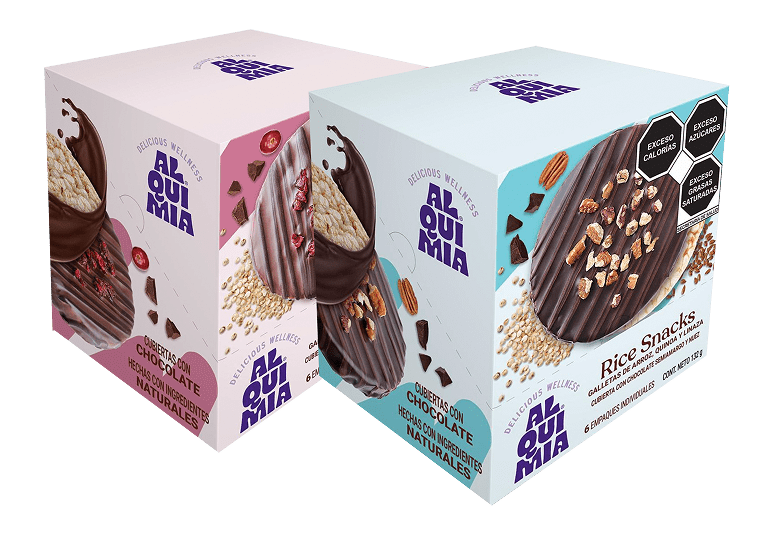
Golden habit: skip the sugar rollercoaster. A blood-sugar crash can feel a lot like anxiety, racing heart, shaky hands, the whole thing, so understanding your sugar cravings is basically anxiety prevention in disguise. Alquimia Food bakes its rice snacks instead of frying them, with real walnuts and zero added sugar, an easy way to check several of these boxes at once.
Nutrients That Support Mental Well-Being and Where to Find Them
If you only remember six things from this article, make it these, the nutrients doing the real heavy lifting for your mood:
- Magnesium: the “chill out” mineral, tied to lower self-reported anxiety across several studies. Most research lands around 300-400 mg a day, a couple handfuls of almonds or spinach gets you close.
- Omega-3 fatty acids: the strongest anxiety-lowering effect shows up around 2g a day. If fish isn’t your thing, chia and flax seeds stack up faster than you’d think.
- B vitamins (B6, B12, folate): the unsung backstage crew that helps your body turn tryptophan into serotonin. Eggs, leafy greens, and legumes cover most of what you need.
- Tryptophan: the raw material serotonin is made from, and most of that conversion happens in your gut. Turkey, tofu, and bananas all deliver it.
- L-theanine: green tea’s calm-but-alert secret weapon. Most studies use 200-400 mg a day, roughly two to four cups.
- Probiotics: food for the gut bacteria linked to lower social anxiety. Not a yogurt person? A daily glass of kefir does the same job.
Honestly, a handful of magnesium rich snacks like almonds or pumpkin seeds checks off half this list in one bite. And since magnesium also helps you sleep, it’s pulling double duty if anxiety’s been messing with your nights too, Alquimia’s snacks for better sleep lean into that overlap.
FAQs:
Can eating certain snacks really reduce anxiety?
Yes, within reason. Magnesium, omega-3s, and L-theanine all show real, if modest, effects on anxiety in studies. They won’t replace therapy or medication if you’re dealing with a diagnosed disorder, but they can genuinely take the edge off a rough day.
What nutrients are most important for mental health?
Magnesium, omega-3s, B vitamins, tryptophan, L-theanine, and gut-friendly probiotics have the strongest research behind them. Getting them from actual food beats chasing one miracle supplement.
Are nuts good for anxiety and stress relief?
Big yes, especially walnuts. In a 16-week study, university students who ate walnuts daily held up noticeably better under academic stress than those who didn’t, probably thanks to the omega-3 and magnesium combo.
How quickly can food affect anxiety levels?
Some effects show up fast: L-theanine can lower stress hormones within about an hour. Others, like the gut-bacteria benefits from fermented foods, build up over weeks of eating them consistently.
References
- National Institute of Mental Health (NIMH) — Any Anxiety Disorder. https://www.nimh.nih.gov/health/statistics/any-anxiety-disorder
- Stanford Report — Scientists explore role of gut-brain axis in Parkinson’s, anxiety, and long COVID (2025). https://news.stanford.edu/stories/2025/03/gut-brain-research-long-covid-parkinsons-anxiety
- Caltech News — Microbes Help Produce Serotonin in Gut (2015). https://www.caltech.edu/about/news/microbes-help-produce-serotonin-gut-46495
- Bafkar et al., BMC Psychiatry — Efficacy and safety of omega-3 fatty acids supplementation for anxiety symptoms (2024). https://www.ncbi.nlm.nih.gov/pmc/articles/PMC11186166/
- Herselman et al., Nutrients — The Effects of Walnuts and Academic Stress on Mental Health, General Well-Being and the Gut Microbiota in a Sample of University Students (2022). https://www.mdpi.com/2072-6643/14/22/4776
- Hilimire et al., Psychiatry Research — Fermented foods, neuroticism, and social anxiety: An interaction model (2015). https://www.sciencedirect.com/science/article/abs/pii/S0165178115002140
- Tsang et al., Antioxidants — Effect of Polyphenol-Rich Dark Chocolate on Salivary Cortisol and Mood in Adults (2019). https://www.mdpi.com/2076-3921/8/6/149
- Williams et al., Plant Foods for Human Nutrition — The Effects of Green Tea Amino Acid L-Theanine Consumption on the Ability to Manage Stress and Anxiety Levels (2019). https://link.springer.com/article/10.1007/s11130-019-00771-5
- Rawji et al., Cureus — Examining the Effects of Supplemental Magnesium on Self-Reported Anxiety and Sleep Quality (2024). https://www.ncbi.nlm.nih.gov/pmc/articles/PMC11136869/