How to Read Nutrition Labels: A Simple Guide to Knowing Exactly What You’re Eating
Ever flipped a snack over, seen a wall of numbers and thought “nope”? Same. But here’s the thing: learning how to read nutrition labels is way easier than it looks. Give it five minutes.
Think of it like this: the front of the bag is the trailer, and the back is the movie. In this guide you’ll see what each part of the label means, the five numbers worth a quick look, and what words like “natural” or “light” really mean. 👀🔎
Breaking Down the Nutrition Facts Label: What Each Section Really Means
According to the FDA’s official label guide, the Nutrition Facts label has four main parts: serving info, calories, nutrients and the % Daily Value. Let’s meet them.
🍽️ Serving info. Every number on the label is for one serving, not the whole bag. A serving isn’t a rule. It’s just what people usually eat at once.
⚡ Calories. This is the energy one serving gives you. Labels use 2,000 calories a day as a general reference, but everyone’s needs are different.
⚖️ Nutrients. Picture two teams. Team “a little less” is saturated fat, sodium and added sugars. Team “a little more” is fiber, vitamin D, calcium, iron and potassium.
📊 % Daily Value (%DV). It tells you how much one serving adds to your day, so you don’t have to do any math. The FDA’s shortcut: 5% or less is low, and 20% or more is high.
📋 Ingredients. They go from most to least by weight, so the first ingredient is the star of the show.
The 5 Numbers You Should Always Check Before Buying a Packaged Snack
Five numbers, five seconds each. Ready? 📝
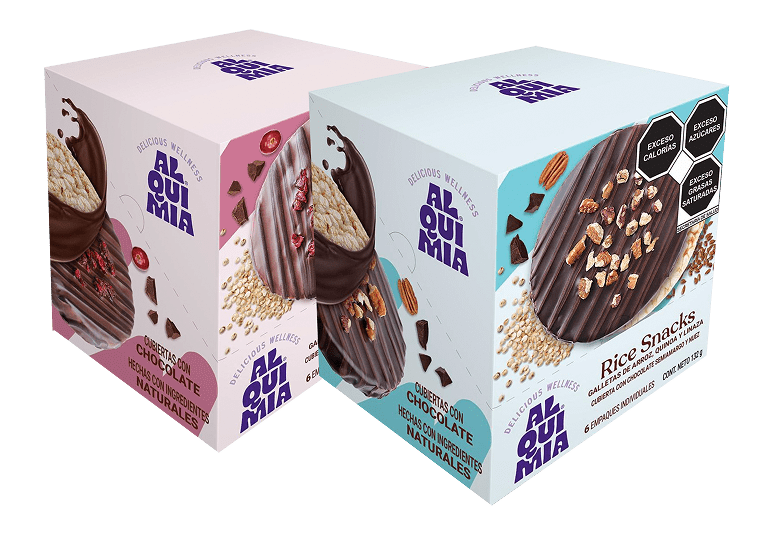
- Servings per container. If a bag has 3 servings and you eat the whole thing, multiply everything by 3. Individually wrapped snacks, like ours, make this part a lot easier.
- Calories. Quick gut check: is this a little bite to get you through the afternoon, or almost a meal? On stressful days, it helps to have some snacks for anxiety already in mind.
- Added sugars. This is the sugar added while making the food, including honey and syrups. The label’s daily reference is 50 grams. And no, this isn’t about giving up chocolate. It’s about enjoying it knowing what’s inside. If sweet cravings hit you every afternoon, here’s why that happens.
- Sodium. The daily reference is 2,300 mg. Savory snack lover? Just glance at the %DV.
- Fiber. It’s on team “a little more,” with a daily reference of 28 grams. The %DV counts your whole day, so every meal and snack adds its part. That’s where planning helps: here’s how to meal prep your snacks for the week.
Common Label Claims Like ‘Natural’ or ‘Light’ (and What They Actually Mean)
Some words on the front of the bag follow strict rules. Others are more relaxed. Here’s your cheat sheet.
“Natural.” This is one of the relaxed ones. The FDA hasn’t given it an official definition, so think of it as a description rather than a technical claim.
“Light.” This one does have rules. It usually means at least one-third fewer calories or 50% less fat than the regular version. The label also has to say what it’s being compared to.
“Sugar-free.” This means less than 0.5 grams of sugar per serving. Just remember that sugar-free doesn’t mean calorie-free.
Want more simple tips for snacking smarter? 👉Explore our blog.
FAQs:
What is the most important thing to check on a nutrition label?
The serving size, because everything else depends on it. Bigger packages that could be eaten in one sitting sometimes use a dual-column label, which shows numbers per serving and per package side by side. If you see one, you don’t even need to multiply.
How do I know if a snack has too much sugar?
Look at the Added Sugars line, then think about your whole day instead of judging one snack alone. The FDA calls this a dietary trade-off: if you enjoy something sweeter, you can balance it with lower-sugar choices at other meals.
What does ‘per serving’ mean and why does it matter?
It means the numbers describe one portion. The FDA’s own example is a frozen lasagna: one cup has 280 calories, but the package holds four cups, so eating all of it adds up to 1,120 calories. Same food, very different picture.
Where do I find allergens on a food label?
Check the ingredient list or the “Contains” line right next to it. U.S. labels must name the nine major allergens: milk, eggs, fish, crustacean shellfish, tree nuts, peanuts, wheat, soybeans and sesame.
References
- U.S. Food and Drug Administration (FDA) — “How to Understand and Use the Nutrition Facts Label” (content current as of March 5, 2024). https://www.fda.gov/food/nutrition-facts-label/how-understand-and-use-nutrition-facts-label
- Electronic Code of Federal Regulations (eCFR) — “21 CFR 101.4: Food; designation of ingredients” (Title 21 last amended June 5, 2026). https://www.ecfr.gov/current/title-21/chapter-I/subchapter-B/part-101/subpart-A/section-101.4
- U.S. Food and Drug Administration (FDA) — “Use of the Term Natural on Food Labeling” (no publication date listed). https://www.fda.gov/food/food-labeling-nutrition/use-term-natural-food-labeling
- Electronic Code of Federal Regulations (eCFR) — “21 CFR 101.56: Nutrient content claims for ‘light’ or ‘lite’” (Title 21 last amended June 5, 2026). https://www.ecfr.gov/current/title-21/chapter-I/subchapter-B/part-101/subpart-D/section-101.56
- U.S. Food and Drug Administration (FDA) — “Guidance for Industry and FDA: Dear Manufacturer Letter Regarding Sugar Free Claims” (no publication date listed), based on 21 CFR 101.60(c). https://www.fda.gov/regulatory-information/search-fda-guidance-documents/guidance-industry-and-fda-dear-manufacturer-letter-regarding-sugar-free-claims
- ABC News — “FDA adds sesame to major food allergen list, updates labeling requirements” (2023). https://abcnews.go.com/food/story/fda-adds-sesame-major-food-allergen-list-updates-96370328